Expense Management Software for Small Businesses 2026


Managing business expenses shouldn’t mean chasing receipts, fixing spreadsheet errors, or losing track of costs. Yet many teams still rely on manual processes that waste hours every month and increase the risk of costly mistakes
That’s where expense management software specially designed for small businesses comes in. Instead of juggling paperwork and manual data entry, modern tools automate expense tracking, approvals, and reporting, giving you real-time visibility into every transaction.
In this guide, we’ll break down the best expense management tools for 2026, helping you reduce admin work, improve financial accuracy, and take control of your business expenses with confidence.
Key Takeaways
- Expense management software for small businesses eliminates manual expense tracking by automating receipt capture, approvals, and reporting – saving time and reducing errors.
- Solutions like Envoice go further by streamlining reimbursements, enforcing spending controls, and giving teams real-time visibility into every expense, enabling faster decisions and better cost control.
4 Best Expense Management Tools for Small Businesses: At a Glance
| Software | Use Case | Pricing |
|---|---|---|
| Envoice | Powerful Expense Tracking and Pre-accounting Solution | Starts at $7 monthly. Free trial available. |
| FreshBooks | Robust Invoicing and Expense Tracking Tool | Starts at $19 monthly. |
| QuickBooks Online | All-around Accounting and Cash Flow Management Tool | Starts at $35 monthly. |
| Ramp | A/P Automation and Spend Management Solution | Starts at $15/user monthly. |
#1. Envoice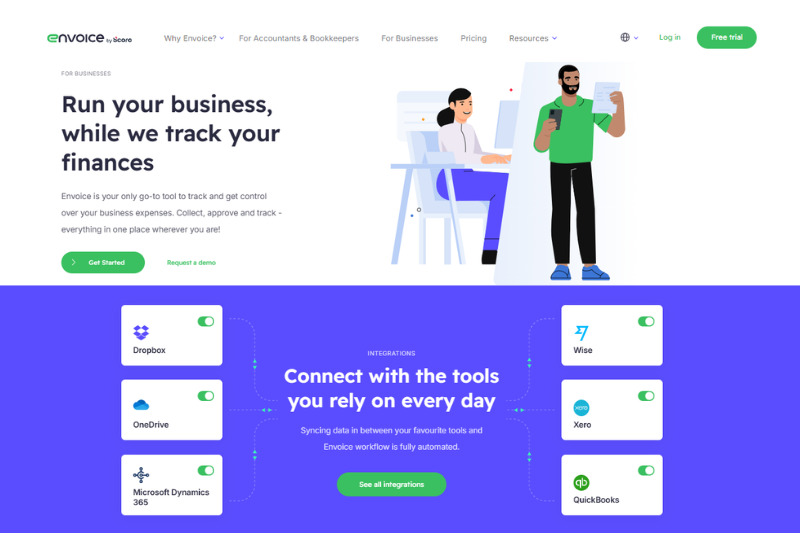
Use Case: Powerful Expense Tracking and Pre-accounting Solution
Envoice is a robust pre-accounting software solution that simplifies expense management for small and medium-sized businesses. It automates repetitive tasks like receipt scanning, data categorization, and expense approvals through invoice scanning software, allowing your finance team to reduce paperwork and efficiently reimburse expenses. It also supports multi-currency expenses and integrates with notable accounting software like QuickBooks, Microsoft Dynamics 365, and Xero, helping unify your financial systems while cutting bookkeeping costs.
Key Expense Management Features
- AI-Powered Data Extraction with Human-in-the-Loop Review – Envoice lets you easily scan receipts and get key, categorized information through its AI-driven data extraction tool, SmartExtract. You can also ensure 99.9% accuracy of your extracted data through ExactExtract and our Human-in-the-Loop service.
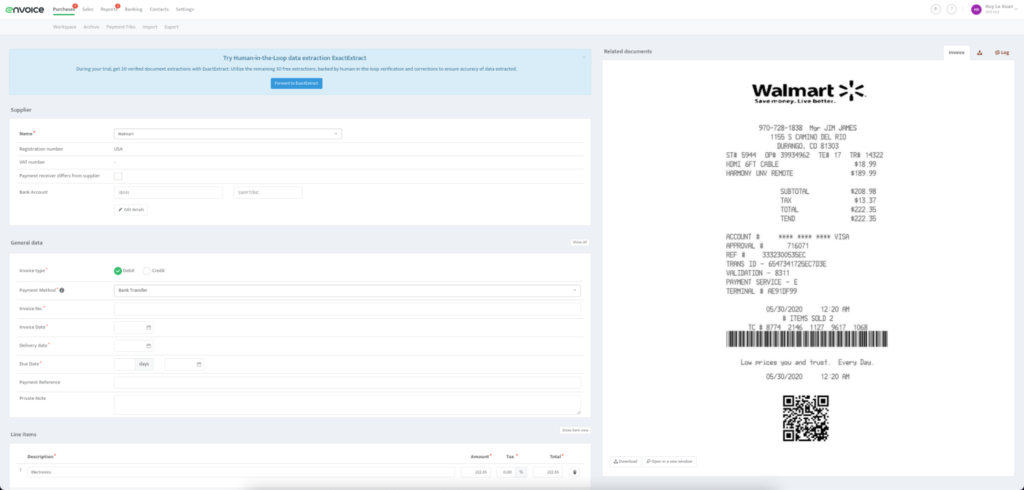
- Faster Expense Approvals – Envoice makes your business’s approval process more efficient using a multi-level approval process. This gives you greater visibility and control over company spending while helping prevent unauthorized transactions.
- Envoice Mobile App – Envoice makes expense reporting faster for your employees through its expense management app. It allows them to scan paper receipts using their mobile devices, which they can attach to their expense report, even when offline. You can also view these reports in real-time.
Pros of Using Envoice for Your Business
Streamlined Approval Workflows – Envoice lets you create an approval workflow that’s suited for your business. You can set expense policy rules to auto-approve recurring costs, review employee expenses, and prevent fraud like duplicate receipts. This enhances transparency, saves countless hours by reducing manual delegation, and allows for quick reimbursement, keeping your employees satisfied.
Efficient Expense Reporting – Our platform provides a user-friendly mobile app with robust receipt scanning functionality that allows your employees to submit full expense reports and travel requests, which you can view in real time. This allows your finance team to track expenses for better financial planning and do next-day reimbursement.
Centralized Team Communications – Envoice makes collaboration for your finance team much easier through centralized communication. This gives every member real-time updates and notifications on tasks and ensures every member is on the same page.
Pricing
Envoice offers the following pricing tiers:
- Essential – The Essential plan is recommended for small businesses looking to automate bookkeeping tasks. It costs $7 per company/month.
- Business – The Business plan is ideal for companies wanting to collaborate on their pre-accounting tasks. It starts at $14 per company/month.
Try Envoice now with a free 14-day trial—no credit card needed.
#2. FreshBooks
Use Case: Intuitive Invoicing and Expense Tracking Tool
FreshBooks is a premier accounting, invoicing, and spending management solution for small businesses and freelancers. It has tools for automating accounts receivable (A/R) and tracking cash flow. It can also capture receipts for various expenses, keeping you ready for tax time.
Key Expense Management Features
- FreshBooks Mobile App – FreshBooks offers a capable mobile app that you can use to scan receipts and get essential expense data using optical character recognition (OCR). It also allows you to file expense reports, track mileage, and communicate with your customers.
- Credit Card Import – FreshBooks lets you track your expenses automatically by connecting your bank account or credit card to the platform. This allows you to check updated information about your most recent payments, credit card transactions, and more.
Cons of Using FreshBooks
While you can use FreshBooks to track expenses from your bank account, it cannot reconcile your transactions unless you connect your bank account to the platform, which can be risky for some.

Note: FreshBooks only allows one free user per plan (except Select) and requires you to pay $11 per additional team member. If you want a cheaper expense management and pre-accounting tool, consider Envoice. Our platform has robust features for creating business expense approval workflows and full expense reports. It also allows you to add your entire team at no additional cost. Contact us now to enhance your team’s collaboration!
Pricing
FreshBooks offers flexible pricing plans designed for freelancers and small businesses, with frequent promotional discounts for new users.
- Lite – Starts at $23 per month (discount $6 per month for four months)
- Plus – Starts at $43 per month (discount of $17 per month for four months)
- Premium – Starts at $70 per month (discount of $21 per month for four months)
They also provide a 30-day free trial, allowing you to test their invoicing and expense tracking features before committing.
#3. QuickBooks Online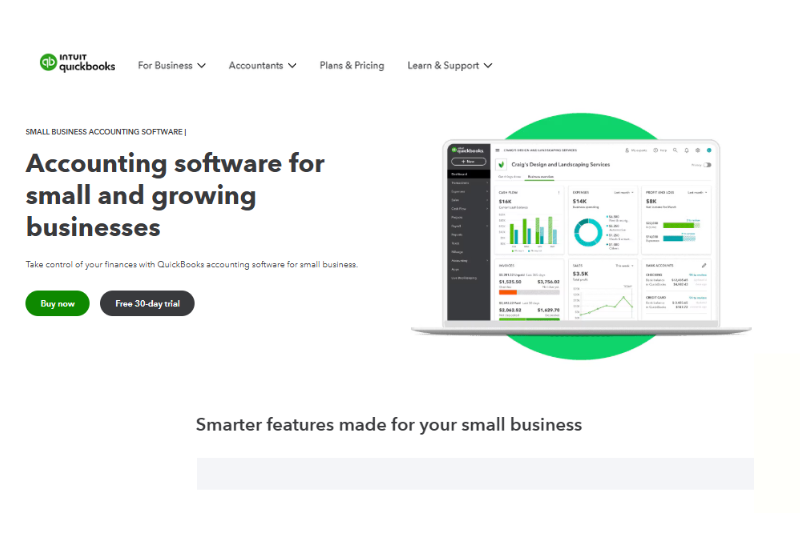
Use Case: All-Around Accounting and Cash Flow Management Tool
QuickBooks Online is a robust bookkeeping tool and one of today’s most popular accounting solutions. Its powerful reporting features let you manage expenses and cash flow to see valuable insights for creating budgets. Your employees can also capture and submit expenses from anywhere using the mobile app.
Check out quickbooks online vs xero for insights into expense tracking, reporting, and business fit.
Key Expense Management Features
- Bank Account Sync and Reporting Tools – QuickBooks provides you with built-in reports essential for tracking business expenses, such as cash flow statements. It has features for syncing bank account transactions, allowing you to do corporate card reconciliation seamlessly without manually entering data.
- QuickBooks Mobile App – QuickBooks offers a user-friendly mobile app for receipt scanning and expense reporting. You can also run reports and track expenses from your phone, including bank transactions and other payment apps
Cons of Using QuickBooks Online
QuickBooks only allows you to access advanced features such as workflow automation and full expense reporting on their Advanced plan. This makes the platform more expensive, especially for small business owners and startups. Unlike other expense management platforms, QBO only allows a limited number of users (only up to 25).
Note: QuickBooks lacks tools for creating business expense approval workflows. For an affordable add-on for your expense management needs, try Envoice. Our platform provides approval workflows tailored for your business, allowing your team to effectively track spending, implement expense policies, and prevent fraud. Contact us to learn more!
Pricing
QuickBooks Online offers tiered pricing depending on the level of accounting features and automation your business requires. Like FreshBooks, it frequently runs promotional discounts.
- Simple Start – Starts at $38/month (often discounted to ~$19 per month for the first 3 months)
- Essentials – Starts at $75/month (discounted to ~$37.50 per month intro pricing)
- Plus – Starts at $115/month (discounted to ~$57.50 per month intro pricing)
- Advanced – Starts at $275/month (discounted to ~$137.50/month intro pricing)
QuickBooks regularly offers 50% off for the first 3 months, making it more affordable initially, but costs increase significantly after the promotional period.
#4. Ramp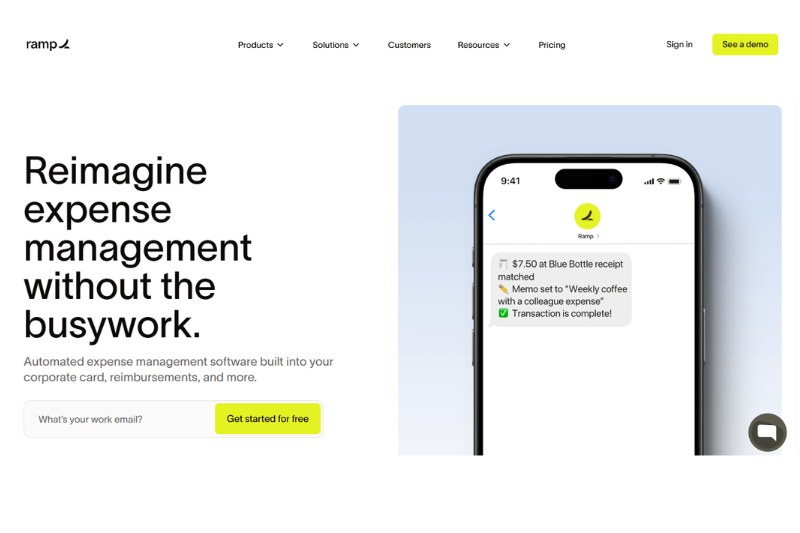
Use Case: A/P Automation and Spend Management Solution
Ramp is an A/P automation and spend management software for multiple businesses. It offers functionality for managing employee expenses, such as corporate cards and spending rules. You can also use it to control spending across your team, especially travel costs, by enforcing expense policies and gaining insights from built-in reports.
Key Expense Management Features
- Corporate Card – Ramp lets you control company spending through corporate and virtual cards with set permissions. You can create workflows and assign administrators to review expenses from questionable merchants and when an employee exceeds their budget.
- Travel Management – Ramp offers travel management tools, letting you incentivize employees to spend less and create spending policies. You can also save by allowing your team to book through Priceline.
Cons of Ramp
While Ramp introduced its corporate card as a replacement for traditional credit cards, some users had issues with their limited credit limits and rebates. It also issues only one physical card per employee, which can seem limited for various businesses.
Pricing
Ramp stands out by offering a free entry-level plan, making it highly attractive for startups and small businesses focused on spend management.
- Free Plan – $0/month (includes core expense tracking and corporate card features)
- Ramp Plus – Starts at $15 per user per month (may include additional platform fees depending on usage/team size)
- Enterprise – Custom pricing (contact sales)
Ramp’s free plan provides strong baseline functionality, while paid tiers unlock advanced controls, automation, and reporting tools.
Note: Pricing and discounts for these services may vary based on promotions, billing cycles, and region. Always check the official pricing pages for the most up-to-date information.
3 Benefits of Using Expense Management Software
Choosing robust expense management software helps significantly improve your expense tracking and reporting process, allowing your finance team to streamline financial operations, forecast budgets, and decrease operating costs.
Here are three main benefits of using expense management software for your business:
#1. Increased Efficiency
Integrating a robust expense management tool in your business allows employees to file an expense report more quickly and makes approvals faster for your administrators, resulting in increased cash flow. Employees will also be highly satisfied with quick reimbursement and can focus on high-value activities.
#2. Reduced Errors and Delays
When using expense software with automation tools, your finance team can reduce manual errors from manual tasks like data entry and improve financial reporting accuracy. Employees can create employee expense statements accurately with advanced receipt scanning from anywhere on their smartphones.
#3. Swift Employee Reimbursements
User-friendly expense management tools allow your employees to file expense reports seamlessly, reimburse employees faster, and receive reimbursement once approved. This eliminates delays caused by manual delegation of tasks and significantly increases employee satisfaction.
Final Thoughts
Choosing the right expense management software can dramatically reduce admin workload, improve cash flow visibility, and eliminate reimbursement delays. By replacing manual processes with automation, your team can track expenses accurately, enforce spending policies, and make faster financial decisions with confidence.
If you’re looking for a solution that combines powerful automation with ease of use, Envoice helps you streamline expense reporting, speed up approvals, and stay in control of every transaction. With seamless integrations into tools like QuickBooks, Sage Accounting, and Xero, you can sync your data effortlessly and keep your financial systems aligned.
Start simplifying your expense management today; try Envoice and see how quickly you can reduce manual work, improve accuracy, and get real-time visibility into your business spending.
FAQs
What is the best expense management software for small businesses?
The best expense management software for small businesses balances affordability with powerful automation features.
Tools like Envoice are top-rated because they handle everything from receipt capture to authorization workflows without the high costs of enterprise platforms. The right choice should integrate smoothly with your accounting systems and save your team time.
How does an expense management system work for business expenses?
An expense management system digitizes the entire lifecycle of business expenses from the initial swipe to the final audit.
Once an employee uses corporate cards or their own funds, they simply capture receipts via a mobile app. The expense management software then extracts data, routes it to managers to approve expenses, and syncs with accounting tools.
Where to find top expense management software and bill pay solutions?
You can find leading solutions by comparing specialized pre-accounting tools against traditional accounting platforms.
While giants like QuickBooks Online offer basic tracking, niche providers like Envoice often provide better bill pay integration and cost control. Look for platforms that offer a free trial to test their expense management process firsthand.
What are the primary benefits of using accounting software for expense reports?
Contemporary accounting tools provide the foundation for accurate expense reports and better oversight of company spending.
These existing systems enable you to monitor transactions in real time and maintain accurate financial records across all departments. This eliminates the need for messy spreadsheets and reduces the risk of hidden costs or missing tax deductions.
How do companies manage the expense management process efficiently?
Efficient firms use a centralized expense management platform to automate the entire workflow- from submission to reimbursement
By allowing staff to submit expense reports digitally, managers can approve expenses instantly from any device. This speeds up reimbursements while giving finance teams clear visibility and control over company spending.
What tools can handle complex expense claims for small businesses?
Advanced expense management software for small businesses is designed to handle complex expense claims, including travel expenses and multi-currency transactions.
Tools like Concur Expense, Envoice, and Ramp offer automated approvals, policy enforcement, and real-time expense tracking to improve visibility into employee spend.
These systems also help maintain compliance with tax laws by automatically flagging duplicate or non-compliant entries, while allowing businesses to control budgets through clear spending limits.
Produced by our content partners and reviewed by Envoice’s internal experts to ensure it reflects real accounting workflows and accurate product usage.
Articles you might like


STAY ALWAYS TUNED
Subscribe to newsletter
Still not sure?
- Don’t spend time on manual work
- Streamline bookkeeping processes with AI
- Automate invoice processing
- Integrate with the tools you rely on every day